Digital marketing is much more than posting on social media. For a business, it is about using websites, search, advertising, content and other digital channels to help the right customers find you and take action.
Digital marketing can sound complicated when it is presented as a long list of platforms, tools and technical terms. For a business owner, however, the basic idea is much simpler.
Digital marketing is about using online channels to help people find your business, understand what you offer, trust you and eventually take action. That action might be making a phone call, sending a WhatsApp message, requesting a quotation, booking a service or buying a product.
A digital agency helps businesses plan and manage some or all of these activities. The exact services vary, but the best strategies are built around the customer rather than around a particular platform.
What Is Digital Marketing?
Digital marketing is the promotion of a business, product or service through digital channels. These channels can include search engines, websites, online advertising, social media, email, content and other online platforms.
Imagine someone in Nairobi needs a water purifier. They might search Google, compare several businesses, check reviews, visit a website and then contact the company through WhatsApp. Every one of those interactions is part of the wider digital customer journey.
Digital marketing helps a business become visible during that journey and gives the customer useful information when they are deciding what to do next.
Digital Marketing Is Bigger Than Social Media
Social media is probably the part of digital marketing that most people see every day, but it is only one part of the picture.
A business can have an active Facebook or Instagram account and still struggle to generate enquiries if customers cannot find the business on Google, the website is difficult to use or there is no clear way to contact the company.
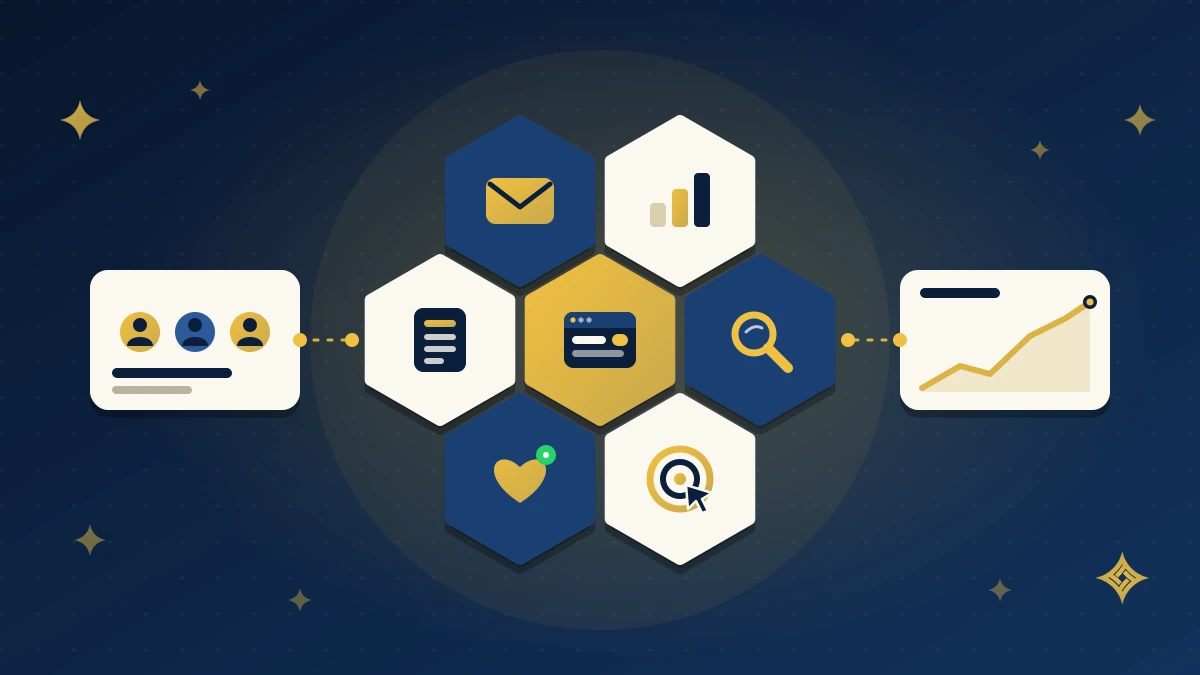
Depending on the business, digital marketing can include:
- Search engine optimisation
- Google Ads
- Social media marketing
- Content marketing
- Website development
- Email marketing
- Local SEO
- Online reputation management
- Conversion optimisation
- Analytics and performance tracking
The important question is not how many channels a business uses. It is whether the channels being used actually help reach the right customers.
What Does a Digital Agency Actually Do?
A digital agency helps businesses use digital channels more effectively. Some agencies specialise in one area, while others provide several services under one team.
The work can involve strategy, design, development, advertising, search engine optimisation, content, analytics and ongoing optimisation.
For example, a business may need a new website before it starts investing heavily in online advertising. Another business may already have a good website but struggle to appear in Google search results. A third may receive plenty of website visitors but very few enquiries.
These businesses have different problems, so they should not all receive the same digital marketing strategy.
SEO Helps People Find Your Business in Search
Search engine optimisation, commonly called SEO, focuses on improving a website's visibility in organic search results.
When someone searches for something related to your business, you want your website to have a reasonable opportunity of appearing when the search is relevant.
SEO can involve improving website structure, creating useful content, targeting relevant searches, improving technical performance, strengthening local visibility and making it easier for search engines to understand the website.
SEO is particularly useful for businesses that want to build visibility over time rather than relying entirely on paid advertising.
If improving your organic search visibility is one of your goals, our SEO services help businesses build stronger search visibility around relevant customers and searches.
Google Ads Can Reach People Who Are Already Searching
SEO can take time to build. Google Ads provides another way to appear when people are actively searching for products and services.
A business can create campaigns around relevant searches and direct potential customers to appropriate pages on its website.
But advertising is not simply about paying for clicks. The search, advert, landing page, offer and next step all need to make sense together.
If someone searches for a service, clicks an advert and lands on a page that does not answer what they were looking for, the advertising budget can be wasted.
Our Google Ads services focus on building campaigns around relevant searches and measurable business actions rather than treating clicks as the final goal.
Actionable Tip
Before increasing your advertising budget, check what happens after someone clicks. Make sure the landing page is relevant, the contact options work and important enquiries or sales are being tracked.
Your Website Is at the Centre of Your Online Presence
Your website is often the place where different parts of your digital marketing strategy come together.
Someone may discover your business through Google, social media, an advert or a recommendation. The website then gives them more information about your services, answers their questions and provides a way to take the next step.
This is why a website should not simply look good. It should clearly explain what the business does, who it serves, where it operates and how customers can get in touch.
It should also work properly on mobile devices, load efficiently and make important actions easy to complete.
A strong digital marketing strategy becomes much harder to build when the website creates friction for the people it is supposed to convert.
Social Media Helps Businesses Stay Visible and Connected
Social media can help businesses communicate with existing customers, introduce their products or services and show what the business is doing.
It can be especially useful for businesses where visual content, community interaction or frequent updates are important.
But social media should not always be expected to do everything. A post may generate attention without producing a direct enquiry, while a Google search may come from someone who already knows exactly what they need.
The role of social media should therefore depend on how your customers behave and what you want the channel to achieve.
Content Marketing Answers Questions Before Customers Buy
Customers often have questions before they are ready to contact a business. Useful content gives you an opportunity to answer those questions.
A web development company could explain how to choose a website development company in Nairobi. A water treatment business could explain the difference between a water filter and a water purifier. An accountant could explain common tax questions for small businesses.
This type of content can attract people who are researching a problem before they are ready to buy.
Good content can also support SEO because it gives search engines more useful information about the topics and questions a business can address.
Local SEO Helps Businesses Reach Nearby Customers
A business that serves a specific location does not necessarily need to reach everyone online. It needs to reach the people who can actually use its services.
A restaurant in Nairobi, a salon in Westlands or a plumber serving specific parts of the city can benefit from appearing when nearby customers search for relevant services.
Local SEO can involve your Google Business Profile, location information, reviews, relevant website content and consistent business details across online platforms.
Making your location and service areas clear can help both customers and search engines understand where your business operates.
Analytics Shows What Is Actually Happening
Digital marketing should not be based entirely on assumptions. Analytics can show how people reach your website and what they do once they arrive.
Depending on the business, useful actions might include phone calls, WhatsApp conversations, enquiry forms, bookings, purchases or other important interactions.
Looking at these actions can reveal whether a marketing channel is contributing to the actual business goal or simply generating activity that looks impressive on the surface.
The number of people who see your marketing matters less than what the right people do afterwards.
What Should a Digital Marketing Strategy Include?
There is no fixed checklist that every business should follow. A useful strategy starts by understanding the business and its customers.
Understand the customer. Identify who you want to reach, what they need and how they normally search for solutions.
Set a clear goal. Decide whether the priority is enquiries, sales, bookings, brand awareness or another measurable business outcome.
Build a strong foundation. Make sure the website, business information and contact options are useful and reliable.
Choose the right channels. Focus on the platforms where your customers are most likely to be.
Create useful content. Answer real questions and provide information that helps customers make decisions.
Track important actions. Measure the enquiries, calls, bookings, purchases or other outcomes that matter.
Improve over time. Use the information from your campaigns and website to make better decisions.
Do You Need a Digital Agency?
Not every business needs to outsource every part of its digital marketing. Some businesses have an internal team that can manage certain activities, while others prefer to work with specialists.
A digital agency can be useful when a business needs expertise that it does not have internally, wants help managing several channels or simply does not have enough time to handle the work consistently.
The important thing is to understand what you are actually paying for. A good agency should be able to explain what it is doing, why it matters and how progress will be measured.
How to Choose a Digital Marketing Agency in Kenya
Choosing an agency should not be based only on the number of services listed on its website. Look at whether the agency understands your business, explains its approach clearly and can connect its work to meaningful outcomes.
Ask how they measure results. Ask what happens when a campaign underperforms. Ask who will actually work on your account. Ask whether you will have access to your website, advertising accounts and analytics.
You should also be cautious of promises that sound too good to be true. Digital marketing involves competition, testing and continuous improvement. No agency can honestly guarantee every search ranking, enquiry or sale.
Digital Marketing Works Best When the Pieces Support Each Other
SEO, Google Ads, websites, social media, content and analytics should not be treated as completely separate activities.
Someone might discover a business through a Google search, visit an article, return later through an advert and finally contact the business after seeing customer reviews. Different channels can contribute to different stages of that journey.
This is why a strategy that connects the different parts can be more useful than simply trying to become active on every available platform.
The Goal Is Not to Be Everywhere
Businesses sometimes feel pressure to be active on every social network, run several advertising campaigns, publish constantly and rank for hundreds of searches at the same time.
More activity does not automatically mean better marketing.
A smaller number of well-managed channels can be much more effective when they match the way your customers actually search, compare and make decisions.
The goal is to make it easier for the right people to find your business, understand what you offer, trust you and take the next step.
What Does a Digital Agency Really Add?
The value of a digital agency should not simply be the number of posts published or campaigns created. A good agency should bring together strategy, technical knowledge, creative work and ongoing analysis.
That might mean improving a website, identifying useful search opportunities, managing advertising campaigns, creating content, improving conversion paths or analysing what customers do after reaching the website.
The exact work will depend on the business. What matters is that each activity has a reason behind it.
Final Thoughts
Digital marketing is not one service and it is not limited to social media. It is the wider process of using digital channels to help customers find, understand and choose your business.
For one Kenyan business, SEO and local search may be the most important channels. For another, Google Ads and a strong landing page may make more sense. Another business may benefit heavily from content, social media or email.
Start with your customers, not the platforms. Understand how they search, what questions they ask and what makes them choose one business over another.
Then build a digital marketing strategy around that behaviour.
Good digital marketing is not about being everywhere. It is about being useful where your customers are looking.
Frequently Asked Questions
Digital marketing is the use of online channels such as search engines, websites, Google Ads, social media, email and content to reach potential customers and support business goals.
A digital marketing agency helps businesses plan, create, manage and improve their online presence and marketing activities. Depending on the agency, this can include SEO, Google Ads, websites, social media, content, analytics and conversion optimisation.
No. Social media is only one part of digital marketing. SEO, Google Ads, websites, content marketing, email marketing, local search and conversion optimisation can also form part of a digital marketing strategy.
No. The right approach depends on the business, its customers, location, competition and goals. A local restaurant may need a different strategy from a professional services company or an e-commerce business.
It depends on the channel. SEO and content marketing generally take time to build, while paid advertising can generate traffic more quickly. Results also depend on competition, budget, website quality and how well the strategy matches customer behaviour.