When a customer hears about your business today, one of the first things they may do is search for you online. If they cannot find you, or what they find does not build confidence, you may lose the customer before you ever get a chance to speak to them.
What Does a Digital Presence Actually Mean?
A digital presence is more than having a Facebook page or putting a website online. It is the collection of places where customers can find information about your business and decide whether they want to deal with you.
For a typical Kenyan business, this might include your website, Google Business Profile, social media accounts, online reviews, search engine results, business directories, advertisements and the content you publish online.
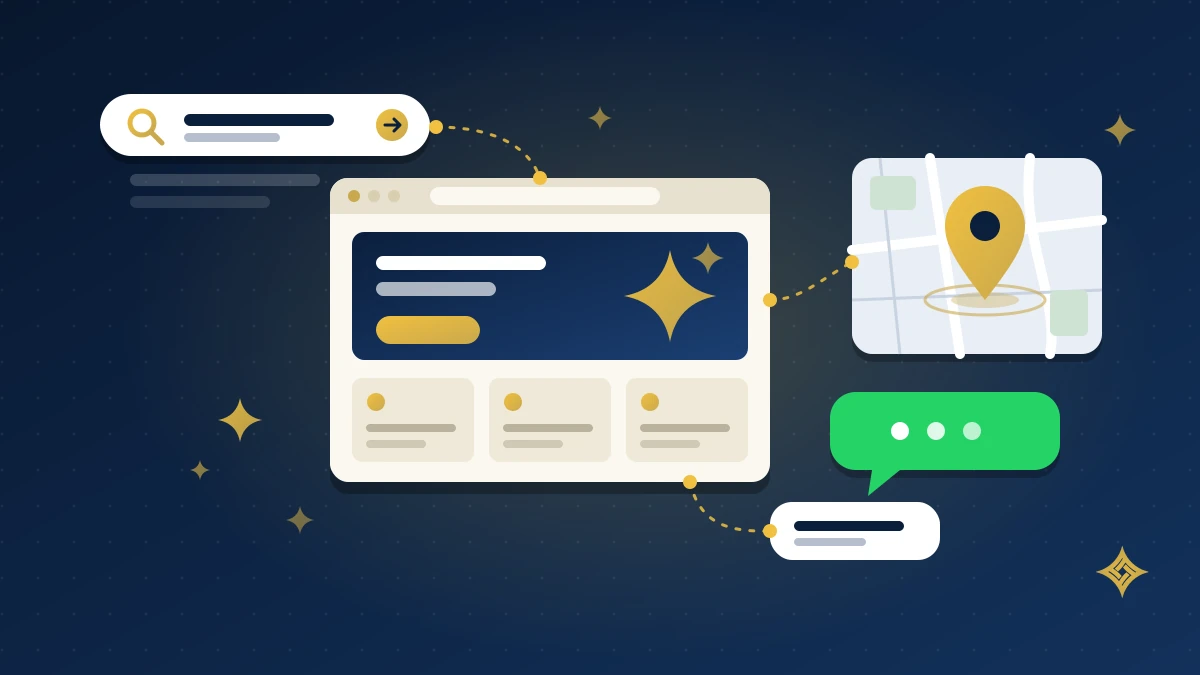
These different parts should support each other. Your website might explain your services in detail. Google can help people find you when they are actively searching. Social media can help people see your work and interact with your business. Reviews can help build confidence. Google Ads can put your business in front of people who are already searching for what you offer.
The goal is not to be everywhere. The goal is to be visible in the places that matter to your customers.
Your Website Is Your Digital Home
Social media is useful, but it should not be the only place your business exists online. A social media platform controls how your content is displayed and who sees it. Its algorithms can change, features can disappear and organic reach can fluctuate.
Your website gives you much more control. You decide what information customers see, how the pages are organised and what you want visitors to do next.
A good business website should make important information easy to find. Customers should be able to understand what you offer, who you serve, where you operate and how to contact you without having to search through several unrelated pages.
The website does not need to be complicated. It needs to be useful. A simple website that clearly explains a business can be much more valuable than an impressive-looking website that leaves visitors wondering what the company actually does.
Google Is Part of the Customer Journey
Having a website is only the beginning. People still need to find it — this is where search engine optimisation, or SEO, becomes important. When someone searches Google, they are usually trying to answer a question, solve a problem or find something they need.
For example, a customer in Nairobi might search for:
- Water purifier in Nairobi
- Website development company in Nairobi
- Hotel in Nairobi CBD
- SEO agency in Kenya
- Accountants in Nairobi
The searches will be different for every industry, but the principle remains the same — people are telling Google what they need. Your website should help Google understand that your business can provide the answer.
That means your pages should use clear language, explain your services properly, provide useful information and target the searches that actually matter to your business. SEO is not simply about adding keywords to a page. It is about making the website useful enough to deserve attention from both search engines and the people using them.
If you want to improve your visibility in search results, our SEO services are designed to help businesses build stronger organic visibility and attract relevant search traffic.
Local Search Matters to Kenyan Businesses
Many businesses do not need customers from every corner of the internet. They need customers nearby. A salon in Westlands does not need someone searching from another continent. A restaurant in Nairobi needs people who can actually visit.
This makes local SEO particularly valuable. Your business name, location, services, phone number and other important information should be clear and consistent across your online presence.
Your Google Business Profile can also play an important role when people search for businesses and services in their area. For example, someone searching for "web development company near me" is already much closer to taking action than someone casually reading an article about websites.
For businesses that serve specific areas, being clear about where you operate can help potential customers understand whether your business is relevant to them.
A Website Should Not Just Look Good
There is nothing wrong with having a beautiful website. But good design is only one part of a successful business website.
A visitor should not have to work out where your phone number is. They should not need to open five pages before discovering what you actually sell. They should not have to guess whether you serve their area. And they should not have to wonder what they are supposed to do after reading the page.
A good website guides the visitor naturally. It answers the important questions and provides a clear next step — calling the business, sending a WhatsApp message, requesting a quotation, booking a service, filling in an enquiry form or purchasing a product.
A website should not make visitors work to understand your business.
Digital Marketing Is Bigger Than Social Media
When many businesses hear the words "digital marketing", they immediately think about social media posts. Social media can certainly be part of a digital marketing strategy, but it is only one piece of the puzzle. Depending on the business, digital marketing can include:
- SEO
- Google Ads
- Social media marketing
- Content marketing
- Email marketing
- Local SEO
- Online reviews
- Remarketing
- Conversion optimisation
- WhatsApp communication
The right combination depends on how customers find and choose the business. A restaurant may benefit heavily from Google Maps, reviews, social media and attractive visual content. A company selling professional services may benefit more from SEO, Google Search Ads, educational content and a strong website. There is no single digital marketing formula that every Kenyan business should follow — the strategy should start with the customer.
Google Ads Can Put Your Business in Front of Ready Customers
SEO can be extremely valuable, but it takes time. Google Ads works differently — when someone searches for a service and your advertisement appears, you have an opportunity to reach that person immediately.
But getting clicks is not the same as getting customers. Imagine someone searches for "SEO agency Nairobi", clicks your advertisement and lands on a page that talks about something completely different — they will probably leave. The search terms, advert, landing page, offer, call to action and conversion tracking all need to work together.
A successful Google Ads campaign is therefore about more than getting an advert in front of someone. The entire journey after the click needs to make sense.
If you are interested in paid search, our Google Ads services can help businesses build and manage campaigns around relevant searches and measurable enquiries.
Actionable Tip
Do not judge an advertising campaign only by the number of clicks it receives. Ask what happened after the click. Did people call? Did they send a WhatsApp message? Did they submit an enquiry? Did they make a booking or purchase?
Your Online Reputation Can Influence the Decision
Imagine two companies provide exactly the same service. The first has a professional website, recent customer reviews, photographs of previous work, clear contact information and useful information about its services. The second has an almost empty social media page and very little information available online. Which one would you be more comfortable contacting?
Reviews can help. Testimonials can help. Case studies can help. A professional website can help. None of these things can replace good service — a business still needs to deliver what it promises. But a strong online presence can reduce the uncertainty that exists before someone decides to contact you.
People often look for signs that a business is active, legitimate and capable of providing what they need. Making that information easy to find can make the decision easier for a potential customer.
Mobile Experience Is Part of Your First Impression
A customer may discover your business while sitting at home, travelling to work, waiting in a queue or simply browsing on their phone. That means your website needs to work properly on mobile devices.
Buttons should be easy to tap. Text should be comfortable to read. Images should load properly. Forms should not be unnecessarily complicated. Important information should not disappear on smaller screens.
A website that looks fantastic on a large monitor but becomes frustrating to use on a phone is still giving customers a poor experience. For many businesses, mobile is where the customer is most likely to encounter the website.
Content Gives Customers a Reason to Keep Visiting
A website does not have to be a collection of sales pages. Useful content can help answer the questions customers have before they contact you.
A water treatment company might publish an article explaining the difference between a water filter and a water purifier. A hotel might publish a guide to choosing accommodation in Nairobi CBD. An accounting firm could explain common tax questions for small businesses.
Not everyone who reads an article is ready to buy immediately, and that is fine. Someone may discover your business through an article, remember your company and return weeks later when they actually need the service. Good content can therefore support both SEO and the wider customer journey.
The best content should be useful even before the reader becomes a customer. If an article answers a real question clearly, it can help establish your business as a useful source of information while also giving people another way to find your website.
You Do Not Need to Build Everything at Once
One of the easiest ways for a business to become overwhelmed is to try to do everything immediately. Start with the fundamentals.
Build a useful website. Make sure customers can understand your business, find important information and contact you easily.
Make the website searchable. Identify the searches that matter to your customers and build useful pages around them.
Establish your local presence. Make sure your business information is accurate and consistent, especially if you serve a particular location.
Choose the right marketing channels. Focus on the platforms and channels where your customers are actually looking.
Track what happens. Measure enquiries, calls, WhatsApp conversations, bookings, purchases or other actions that matter to your business.
Improve over time. Use the information you collect to improve your website, content and marketing campaigns.
A digital presence does not have to be completed in one weekend. It should improve as the business learns more about its customers.
Your Website and Marketing Should Work Together
A website should not operate separately from the rest of your marketing.
Your Google Ads campaigns should lead people to relevant pages. Your social media content should give people a reason to visit your website. Your SEO strategy should help useful pages appear when people search. Your email campaigns can bring previous visitors back.
Each part should support the others.
For example, if you publish an article explaining how to choose a website development company, that article can attract someone researching their options. From there, the reader can learn about your web development services, view examples of your work and contact your team.
This creates a much more useful journey than simply sending every visitor to the homepage and hoping they figure out what to do next.
The Goal Is Not Simply to Be Online
Being online is easy. Building a digital presence that actually helps your business is the difficult part.
A website with almost no useful information will not suddenly generate customers. A social media account with random posts will not automatically build trust. An SEO campaign targeting the wrong searches can spend months producing little value.
The goal should be much simpler. Help the right people find your business. Help them understand what you offer. Give them reasons to trust you. Make it easy for them to take the next step.
Help the right people find your business, understand what you offer, trust you and take the next step.
That is what a useful digital presence should do.
So, Does Your Kenyan Business Really Need a Digital Presence?
For most businesses in 2026, the question is no longer whether customers are online. They already are. They search Google. They check reviews. They compare businesses. They browse social media. They ask questions through WhatsApp.
The real question is whether your business is giving them a good reason to choose you when they find you.
Start with a professional website. Make sure people can find it. Keep your business information accurate. Build your reputation. Choose the marketing channels that fit your customers and measure what happens. Then improve from there.
Because when someone searches for your business tomorrow, you want the answer to be simple:
"Yes, this is the business I was looking for."
Frequently Asked Questions
A website gives customers a reliable place to learn about a business, view its products or services, find contact information and decide whether to make an enquiry. It also gives the business a platform it controls rather than relying entirely on social media.
Social media can be valuable, but it is usually better used alongside a website. A website gives a business more control over its information, customer journey and search visibility, while social media can help attract and engage potential customers.
SEO focuses on improving a website's visibility in unpaid search results, while Google Ads allows businesses to pay for advertising placements on relevant searches and other Google properties. Many businesses can benefit from using both as part of a wider digital marketing strategy.
Local SEO helps businesses become more visible when people search for products or services in a particular location. It is especially useful for businesses serving specific areas such as Nairobi, Westlands, Kilimani, Mombasa or other local markets.
A good starting point is a professional website with clear information, accurate business details and an easy way to contact the business. The business can then build search visibility, establish its local presence, choose suitable marketing channels and track enquiries and other results.