When someone searches for a business near them, Google tries to show the most relevant and useful local results. If your business information is incomplete, inconsistent or difficult to find, you may be missing customers who are already looking for what you offer.
Start With Your Google Business Profile
If you want customers to find your business when they search nearby, one of the most important places to start is your Google Business Profile.
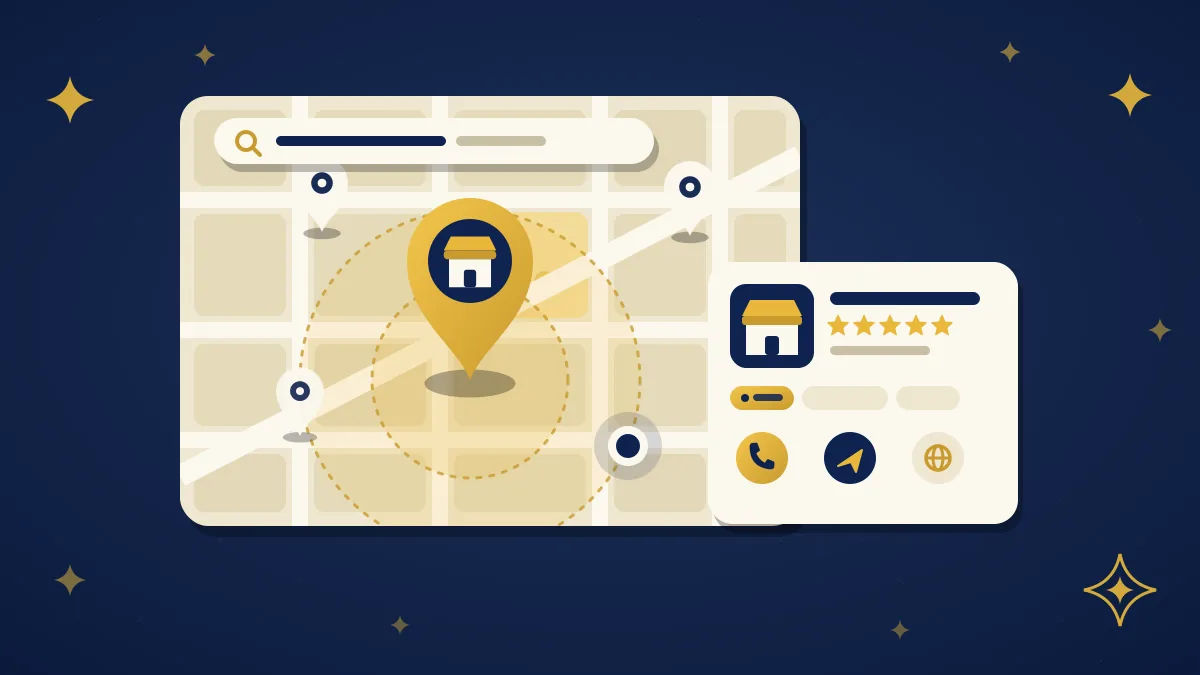
Your Google Business Profile is the information Google uses to understand and display your business in places such as Google Search and Google Maps. It can show your business name, location, phone number, website, opening hours, reviews, photographs and other useful information.
For a customer searching for a service in their area, this information can make the difference between finding your business and finding a competitor.
The first step is therefore simple. Make sure your business has a claimed and properly completed Google Business Profile, and make sure the information accurately represents the business.
Actionable Tip
Search your business name on Google and check what information appears. Look at your phone number, website, location, opening hours, photographs and reviews from the perspective of someone who has never dealt with your business before.
Make Your Business Information Consistent
Google needs to understand that the business listed on your website is the same business appearing on Google Maps, social media, directories and other online platforms.
This is why your important business information should remain consistent across the web.
Your business name, address and phone number are particularly important. These are often referred to as NAP information, which stands for Name, Address and Phone number.
If one website lists an old phone number while another shows a different address, customers can become confused and search engines may have less confidence in which information is correct.
This does not mean every website needs to contain exactly the same wording everywhere. It means the important facts about your business should be accurate and consistent.
Choose the Right Business Category
Your primary Google Business Profile category helps Google understand what your business does.
This sounds like a small detail, but choosing a category that accurately describes your main business can affect how relevant your profile is to local searches.
A hotel, restaurant, accounting firm, web development company and water treatment business all serve different purposes. The category should therefore reflect the main service or type of business rather than simply choosing a category because it sounds popular.
You can also add relevant secondary categories where they accurately describe other important parts of your business.
The goal is not to add as many categories as possible. The goal is to give Google and potential customers a clear understanding of what your business actually does.
Make Your Location Clear
Local search is built around relevance and location. If your business serves customers in Nairobi, Google needs to understand that connection.
Your address should be accurate where you have a physical location that customers can visit. If you operate as a service area business, your service areas should also accurately represent where you provide your services.
Your website should support this information as well.
For example, a business serving customers in Nairobi could have clear information explaining that it operates in Nairobi and the areas it serves. This gives both customers and search engines more context about where the business operates.
Reviews Can Help Customers Choose You
Imagine searching for two businesses that provide the same service. One has several recent reviews from customers and the other has almost none.
Reviews can influence how comfortable someone feels about contacting a business, especially when they have never dealt with that business before.
This is why asking genuine customers for honest reviews can be an important part of building your local presence.
The goal should not be to collect reviews simply because you want a higher number. Genuine reviews can provide useful information about what customers liked, what they purchased and what working with your business was actually like.
You should also respond to reviews where appropriate. A thoughtful response to a positive review shows that the business is active and paying attention. A professional response to a negative review can also show potential customers how you handle problems.
Your reviews are not only for Google. They are also for the customer deciding whether to trust you.
Your Website Still Matters for Local Search
A Google Business Profile is important, but your website remains a major part of your online presence.
Google needs information from different sources to understand what a business does, where it operates and how relevant it is to particular searches.
Your website should clearly explain your services and the locations you serve. Your contact information should be easy to find, and important business details should not be hidden behind unnecessary pages.
If your business provides several services, each important service should also have enough information for a visitor to understand what you actually offer.
This is where a properly planned SEO strategy can help. Local SEO is not simply about putting the name of your city into every page. It is about making your website genuinely relevant to the people and places you serve.
Create Useful Location Pages
Businesses that serve several locations may benefit from dedicated location pages when those pages provide genuinely useful information.
For example, a company providing services across Nairobi could create pages explaining the services available in specific areas where it actually operates.
A useful location page should do more than replace the city name in the same paragraph several times. It should provide information that is relevant to customers in that location.
You could explain the services available, the areas covered, how customers can reach you and any details that are particularly useful for people in that location.
Creating dozens of almost identical pages simply to target different locations is unlikely to provide the same value as creating a smaller number of genuinely useful pages.
Local Content Can Help You Become More Relevant
Your website can also attract local visitors by answering questions that people in your area actually ask.
A hotel in Nairobi could publish useful information about accommodation in Nairobi CBD. A water treatment company could explain common water purification problems faced by homeowners in Kenya. A web development company could explain what businesses in Nairobi should consider when choosing a website developer.
This type of content can attract people who are researching a problem before they are ready to contact a business.
Good content should not be written simply to insert a location keyword. It should answer a real question and provide information that is useful to the person reading it.
Make Your Website Easy to Contact
Getting someone to find your business is only part of the process. Once they arrive, they should be able to contact you without unnecessary effort.
Your phone number should be easy to find. Your WhatsApp option should work properly if you use WhatsApp for enquiries. Contact forms should be simple and should not ask for information that you do not actually need.
Your location should also be easy to understand if customers visit your premises.
A customer who finds your business through Google should not have to search through several pages just to figure out how to make an enquiry.
Local SEO Is More Than Keywords
It is easy to think of local SEO as simply adding words such as "Nairobi" or "Kenya" to your website.
Keywords are useful because they help describe what a page is about, but local visibility depends on much more than repeating a location.
Google looks at different signals to determine which businesses are relevant to a local search. Your business information, website, reviews, location, relevance and other signals can all contribute to how your business is understood.
This means there is no single change that will guarantee that your business appears at the top of every local search.
A stronger approach is to make the entire online presence clear, accurate and useful.
What Can a Kenyan Business Do First?
If your business has never worked on local SEO before, you do not need to change everything at once.
Check your Google Business Profile. Make sure the business name, category, phone number, website, opening hours and location information are accurate.
Check your business information online. Look for old phone numbers, incorrect addresses and other conflicting information across important websites and directories.
Improve your website. Make sure your services, location and contact information are easy for both customers and search engines to understand.
Ask genuine customers for reviews. Make it easy for satisfied customers to leave honest feedback about their experience.
Create useful local content. Answer questions that people in the areas you serve are actually asking.
Keep improving. Review your visibility, customer feedback and website performance and make improvements as you learn more.
Local SEO is not a one-time task. Your business information changes, new competitors appear, customers leave new reviews and the way people search continues to evolve.
Why Some Businesses Struggle to Appear Locally
A business can provide excellent services and still be difficult to find online.
Sometimes the problem is simple. The business profile has not been completed properly. The phone number is outdated. The website does not explain the services clearly. There are very few reviews. Or the business information is different across several websites.
In other cases, the business may be targeting searches that do not match what local customers actually want.
This is why local SEO should start with understanding the customer rather than simply trying to rank for a list of keywords.
Actionable Tip
Search for the main service your business provides together with your location. Look beyond your own business and study the results. What information do the businesses appearing there provide? What do their profiles and websites make easy to understand?
Local Visibility Can Support the Rest of Your Marketing
Local SEO does not have to work separately from your other marketing activities.
Your website can support your Google Business Profile. Your reviews can strengthen trust. Your social media activity can give customers more information about the business. Your content can attract people researching local services. Your Google Ads campaigns can reach people who are actively searching for specific services.
When these parts of your digital presence support each other, customers have more opportunities to discover your business and learn about what you offer.
The Goal Is to Be the Right Business for the Right Search
Getting your business on Google is not simply about trying to appear for every search in your city.
The goal is to appear when someone is looking for the products or services you actually provide and to give that person enough useful information to take the next step.
A complete Google Business Profile, accurate business information, genuine reviews, useful location pages and a helpful website can all contribute to that process.
You do not need to become the biggest business in Nairobi to compete in local search. You need to make it clear what you do, where you do it and why a customer should consider contacting you.
Local SEO is not about being visible everywhere. It is about being visible when the right customer is looking.
Start With the Searches Your Customers Already Make
The best place to begin is not with a complicated SEO strategy. Start by thinking about what your customers type into Google when they need what you provide.
If you run a hotel, think about the accommodation searches your guests make. If you provide professional services, think about the problems customers are trying to solve. If you operate a local shop, think about what someone nearby would search before visiting.
Then look at your Google Business Profile, your website and your online reputation from the customer's point of view.
Can they find you? Can they understand what you offer? Can they see where you operate? Can they trust the business? And can they contact you easily?
If the answer to those questions is yes, you have already built a much stronger foundation for local search.
Frequently Asked Questions
Local SEO is the process of improving a business's online presence so it can appear more prominently when people search for relevant products or services in a specific location.
Create or claim your Google Business Profile, verify the business where required, provide accurate business information and keep the profile updated with relevant details, photographs and customer reviews.
Make sure your business information is accurate, choose relevant categories, add useful photographs, keep your hours updated, provide a clear description and encourage genuine customers to leave honest reviews.
Yes. A well-structured website can help Google understand your services, location and relevance while giving potential customers more information about your business.
There is no fixed timeframe. Results depend on factors such as competition, your current online presence, your website, business location, reviews and the quality of your local SEO work. Consistent improvements over time are generally more useful than expecting an immediate result.
Genuine reviews can contribute to your local presence and can also influence how potential customers view your business. Reviews should be earned naturally rather than created or manipulated.