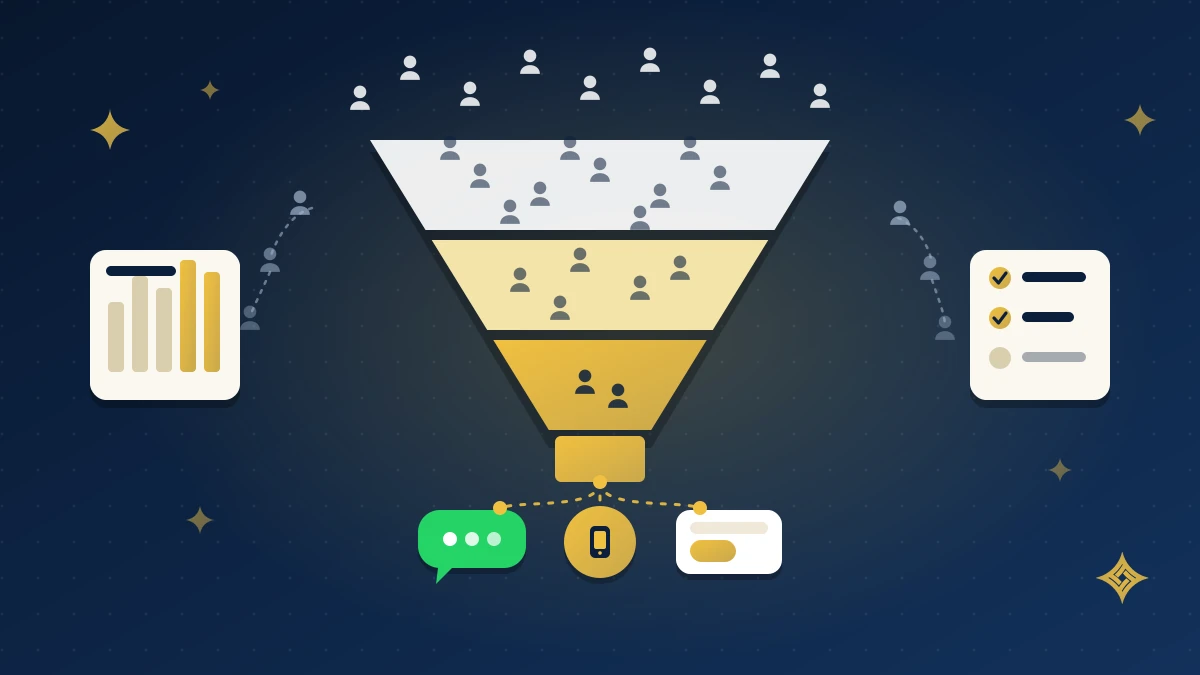
There is no single Google Ads budget that works for every Kenyan business. The right amount depends on what you sell, how competitive your market is, what customers search for and what you want the campaign to achieve.
There Is No Standard Google Ads Budget
One of the first questions businesses ask when considering Google Ads is simple: how much should we spend each month?
The honest answer is that there is no universal figure. A small local business may be able to start with a modest budget, while a company operating in a highly competitive market may need considerably more to generate enough useful traffic.
Your budget depends on several things, including the services you offer, how many people are searching for them, how competitive the searches are, what customers are worth to your business and what you want the campaign to achieve.
Instead of asking what every business should spend, it is more useful to ask what budget makes sense for your particular business and what you expect that budget to accomplish.
How Google Ads Costs Actually Work
Google Ads does not simply charge every business the same amount for every click. The amount you pay can vary depending on the search, competition, ad quality and other factors involved in the auction.
For a search campaign, you will often hear the term CPC, which means cost per click. If one click costs KSh 50 and another costs KSh 150, the same daily budget can produce very different numbers of visits.
This is why a KSh 30,000 monthly budget does not automatically mean that every business will receive the same amount of traffic.
A business targeting lower-cost searches may generate many more clicks from the same budget than a business competing for expensive, highly competitive searches.
What Determines Your Google Ads Budget?
Before choosing a monthly budget, it helps to understand what you are actually paying for and what influences the amount you need.
- Competition. More businesses competing for the same searches can make clicks more expensive.
- Search demand. A service with very few searches may not need a large budget because there may simply not be enough traffic available.
- Customer value. A business selling a KSh 2,000 service will approach advertising differently from one selling a KSh 200,000 service.
- Location. Targeting a specific area can require a different budget from targeting customers across Kenya.
- Campaign goals. A campaign designed to generate enquiries may require a different approach from one focused on online purchases or brand awareness.
- Website performance. If your website makes it difficult for visitors to contact you, increasing the advertising budget may simply produce more expensive traffic without enough additional business.
How Much Should a Small Kenyan Business Start With?
A small business does not necessarily need to spend hundreds of thousands of shillings to start testing Google Ads.
A practical starting budget might be around KSh 10,000 to KSh 30,000 per month for a focused campaign, depending on the industry and competition.
At this level, the goal should not be to dominate every search. The goal is to focus the budget on the searches most likely to produce useful enquiries or sales and learn from the results.
For example, a local service business might focus on a small number of high-intent searches within Nairobi instead of trying to advertise across the whole country.
A focused campaign gives the business a better opportunity to understand which searches produce useful visitors before increasing the budget.
What About a KSh 30,000 to KSh 60,000 Monthly Budget?
A larger budget gives a campaign more room to reach potential customers and collect useful data, but it does not automatically make the campaign more successful.
A business spending KSh 50,000 on poorly targeted searches can perform worse than a business spending KSh 20,000 on a carefully planned campaign.
With a larger budget, however, you may be able to cover more relevant searches, test additional keywords, reach more potential customers and gather enough information to make better optimisation decisions.
This can make sense for businesses that already know their customers, have a clear offer and have a website or landing page that is capable of converting visitors into enquiries or sales.
When Does a Larger Google Ads Budget Make Sense?
Spending more can make sense when the opportunity is large enough to justify it.
For example, suppose a company sells a service worth KSh 100,000 and earns a healthy profit from each new customer. Paying for several relevant clicks to generate a genuine enquiry may make financial sense even when the cost per click is relatively high.
The same advertising cost may not make sense for a low-value product with very little profit per sale.
This is why your advertising budget should be connected to the economics of your business rather than chosen simply because another company spends more.
The right Google Ads budget is not the biggest budget. It is the budget that gives your business a realistic opportunity to generate profitable results.
Example Google Ads Budgets for Kenyan Businesses
The following examples are not fixed prices or guarantees. They are simply useful ways to think about different levels of investment.
| Monthly Budget | Suitable Starting Point | What It Can Allow |
|---|---|---|
| KSh 10,000 to KSh 20,000 | Small local businesses | A focused campaign targeting a limited number of high-intent searches |
| KSh 20,000 to KSh 50,000 | Growing businesses | More search coverage, testing and opportunities to generate enquiries |
| KSh 50,000 to KSh 100,000+ | Competitive or established businesses | Broader search coverage, more testing and greater potential volume |
The important point is that these ranges should not be treated as guarantees. Actual results depend on the searches available, competition, click costs, targeting, website quality and the ability of the business to convert interested visitors.
Do Not Spend Your Entire Budget on Broad Searches
One common mistake is trying to reach as many people as possible instead of focusing on people who are actually looking for the business's services.
Imagine you run a company that installs water purification systems in Nairobi. A search such as "water purifier installation Nairobi" may be much more useful than a very broad search such as "water".
The first search tells you considerably more about what the person wants. The second could mean almost anything.
Good campaign planning therefore involves understanding search intent and deciding which searches deserve your budget.
Your Website Can Determine Whether the Budget Pays Off
Getting someone to click your advertisement is only the first step.
If the visitor reaches a slow website, cannot find the service they searched for or has no obvious way to contact the business, the advertising budget may produce little value.
Your landing page should match the promise made by the advert. If someone searches for "SEO services Kenya" and clicks an advert promising SEO services, they should immediately see relevant information about SEO rather than having to search through the entire website.
Clear information, strong calls to action, simple contact forms and easy access to phone or WhatsApp can all make it easier for interested visitors to become enquiries.
If your website needs improvement before you invest more heavily in advertising, our web development services can help create a faster and more conversion-focused website.
Track What Happens After the Click
Clicks and impressions can tell you whether people are interacting with your advertisements, but they do not tell you everything about the value of the campaign.
A business should also know what happens after someone visits the website.
Depending on the business, useful actions might include:
- Phone calls
- WhatsApp enquiries
- Contact form submissions
- Booking requests
- Purchases
- Quote requests
Proper conversion tracking makes it easier to understand whether the advertising budget is producing meaningful business activity rather than simply generating website traffic.
Actionable Tip
Before increasing your Google Ads budget, make sure you can identify what counts as a valuable result for your business. If you cannot tell whether a click became a call, enquiry, booking or sale, increasing the budget will not solve the measurement problem.
Should You Increase Your Budget?
Increasing the budget can be a good decision when the campaign is already producing useful results and there is more relevant demand available.
For example, if your campaign is consistently generating enquiries from valuable searches and you are regularly reaching the limit of your available budget, increasing the budget may allow you to capture more of that demand.
But if the campaign is receiving clicks without producing useful enquiries, the first step should usually be optimisation rather than simply spending more.
You may need to review your keywords, search terms, targeting, advertisements, landing pages or conversion tracking before increasing the investment.
Google Ads Budget Should Follow Your Business Goals
Different businesses can need very different advertising strategies.
A restaurant may want people to call, view directions or make a reservation. A hotel may want direct bookings. A professional services company may focus on enquiries and consultation requests. An online store may care primarily about completed purchases.
Your Google Ads budget should therefore start with the outcome you want rather than an arbitrary monthly amount.
Once you know what a valuable customer is worth to your business, you can make much more informed decisions about how much you are prepared to spend to acquire one.
Google Ads and SEO Can Work Together
Paid search and organic search are not necessarily competing strategies.
Google Ads can help you reach people immediately for searches that matter to your business, while SEO can build organic visibility that can continue bringing relevant visitors over the longer term.
Paid campaigns can also provide useful information about the searches, messages and services that attract customers. That information can help inform your wider digital marketing strategy.
For businesses that want both immediate visibility and long-term organic growth, combining Google Ads with SEO can provide a stronger overall search strategy.
Start With a Budget You Can Sustain
A Google Ads campaign should not put unnecessary financial pressure on your business.
It is usually better to choose a realistic budget that you can maintain long enough to collect useful information and make sensible improvements than to spend heavily for a short period and stop before you understand what is working.
Start with a focused campaign, measure the results and improve the areas that need attention. If the campaign demonstrates that there is profitable demand available, you can then consider increasing the investment.
So, How Much Should Your Business Spend?
For many small and growing Kenyan businesses, starting somewhere around KSh 10,000 to KSh 30,000 per month can provide a practical starting point for a focused Google Ads campaign. Some businesses will need less, while competitive industries may require considerably more.
The right figure depends on your market, customers, search demand, competition, click costs, customer value and campaign goals.
Instead of asking, "How much should I spend on Google Ads?", a better question is:
What amount can my business invest consistently while giving the campaign a realistic opportunity to generate valuable customers?
Once you answer that question, your budget becomes a business decision rather than simply an advertising number.
Frequently Asked Questions
There is no fixed Google Ads cost in Kenya. Your spending depends on factors such as competition, search demand, click costs, targeting and your campaign goals. Many small businesses can begin with a focused monthly budget and increase it as they identify profitable opportunities.
A small Kenyan business may start with around KSh 10,000 to KSh 30,000 per month for a focused campaign, although the appropriate amount depends on the industry, competition, search demand and value of each customer.
It can be enough to test a focused campaign in some industries, particularly when targeting a limited number of high-intent searches. Results depend on click costs, competition, search volume and how effectively the website converts visitors.
Consider increasing your budget when your campaign is already generating valuable results and there is additional relevant search demand available. If you are getting clicks without useful enquiries or sales, optimise the campaign before simply spending more.
Google Ads and SEO serve different purposes. Google Ads can provide immediate paid visibility, while SEO focuses on building organic visibility over time. Many businesses can benefit from using both as part of a wider search strategy.
Track actions that matter to your business, such as phone calls, WhatsApp enquiries, contact forms, bookings, quote requests and purchases. This helps you understand whether your advertising budget is generating meaningful business results.